All content on this site is intended for healthcare professionals only. By acknowledging this message and accessing the information on this website you are confirming that you are a healthcare professional. If you are a patient or carer, please visit Know AML.

  TRANSLATE

The AML Hub website uses a third-party service provided by Google that dynamically translates web content. Translations are machine generated, so may not be an exact or complete translation, and the AML Hub cannot guarantee the accuracy of translated content. The AML Hub and its employees will not be liable for any direct, indirect, or consequential damages (even if foreseeable) resulting from use of the Google Translate feature. For further support with Google Translate, visit Google Translate Help.

The AML Hub is an independent medical education platform, sponsored by Daiichi Sankyo, Johnson & Johnson, Syndax, Thermo Fisher Scientific, Kura Oncology, and AbbVie. Funders are allowed no direct influence on our content. The levels of sponsorship listed are reflective of the amount of funding given.  View funders.

Now you can support HCPs in making informed decisions for their patients

Your contribution helps us continuously deliver expertly curated content to HCPs worldwide. You will also have the opportunity to make a content suggestion for consideration and receive updates on the impact contributions are making to our content.

Find out more

Masterclass | Menin inhibition in AML: Exploring emerging combination strategies

By Sari Cumming

Share:

Featured:

Eunice WangEunice WangGail J. RobozGail J. RobozJoshua ZeidnerJoshua Zeidner

May 12, 2026

Learning objective: After reading this article, learners will be able to discuss the rationale for menin inhibitor combination strategies in acute myeloid leukemia, key considerations for their use in clinical practice, and emerging insights from clinical trials.


Two menin inhibitors are currently approved as monotherapy by the U.S. Food and Drug Administration (FDA): revumenib, for the treatment of relapsed/refractory (R/R) KMT2A-rearranged (KMT2Aracute leukemia or NPM1-mutated(NPM1macute myeloid leukemia (AML); and ziftomenib for the treatment of R/R NPM1m AML.1,2 Menin inhibitor combination strategies are being investigated, with the aim of further improving efficacy and durability of response in patients with newly diagnosed (ND) or R/R NPM1m or KMT2Ar AML.3 

The AML Hub was pleased to speak with Eunice Wang, Gail Roboz, and Joshua Zeidner to gain their expert insights on the rationale for menin inhibitor combination strategies, the management of side effects of these regimens, and emerging insights from ongoing clinical trials.

Mechanisms and rationale for menin inhibitor combination strategies in AML

Mechanisms and rationale for menin inhibitor combination strategies in AML

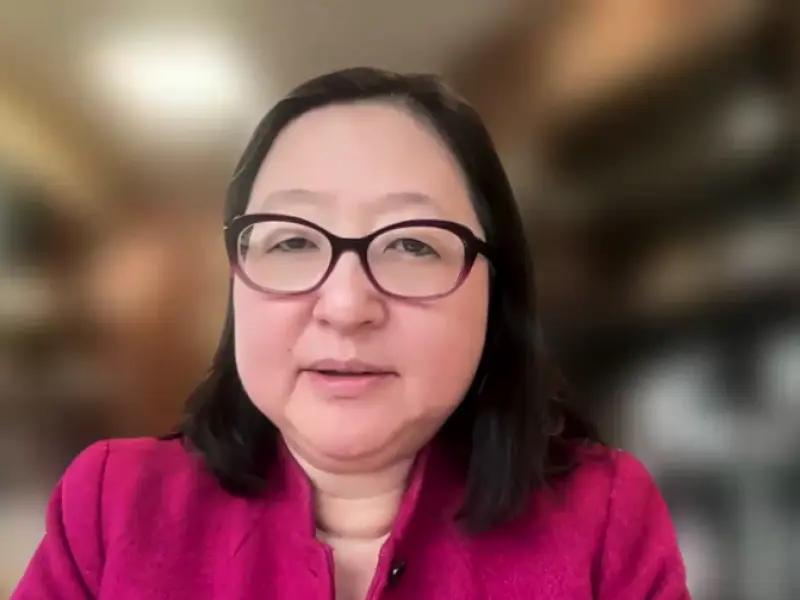
The AML Hub was pleased to speak with Eunice Wang about the mechanisms and rationale for menin inhibitor combination strategies for the treatment of acute myeloid leukemia (AML).

Managing side effects of menin inhibitors in clinical practice

Managing side effects of menin inhibitors in clinical practice

The AML Hub was pleased to speak with Dr Gail Roboz about the side effects typically observed with menin inhibitor-based strategies in acute myeloid leukemia (AML) and approaches for managing these in clinical practice.

What key insights are emerging from ongoing trials of menin inhibitor combination strategies in AML?

What key insights are emerging from ongoing trials of menin inhibitor combination strategies in AML?

The AML Hub was pleased to speak with Dr Joshua Zeidner about the key insights emerging from ongoing trials of menin inhibitor combination strategies in acute myeloid leukemia (AML).

This educational resource is independently supported by Kura Oncology. All content was developed by SES in collaboration with an expert steering committee. Funders were allowed no influence.


References

Please indicate your level of agreement with the following statements:

The content was clear and easy to understand

The content addressed the learning objectives

The content was relevant to my practice

I will change my clinical practice as a result of this content